
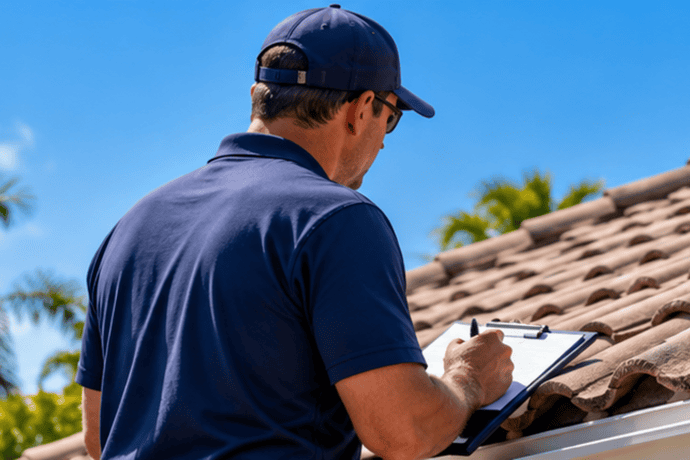
Your roof is one of the most important parts of a Florida home, and insurance companies often review roof information when evaluating a property for homeowners insurance.
Factors such as the roof's age, condition, material, shape, and documented updates may affect an insurance company's underwriting review. Requirements vary by insurance company, so homeowners should avoid assuming that one roof standard applies to every carrier.
Why Does the Roof Matter for Homeowners Insurance?
The roof helps protect the home from rain, wind, hurricanes, and other weather-related damage. Because roof damage can lead to significant property losses, insurance companies may consider roof characteristics when evaluating a home for coverage.
Depending on the insurance company, underwriting may review items such as:
- Roof age
- Roof covering material
- Overall condition
- Remaining useful life
- Roof shape
- Evidence of repairs or deterioration
- Roof replacement or permit history
- Wind mitigation features
How Does Roof Age Affect Florida Homeowners Insurance?
Roof age is commonly reviewed during the homeowners insurance process, but there is no single age requirement that applies to every Florida insurance company.
An older roof may lead an insurance company to request additional documentation, photographs, an inspection, proof of repairs, or information about the roof's remaining useful life.
Some insurance companies may have specific underwriting guidelines based on roof age and roof material. These guidelines can change, so homeowners should confirm current requirements with their licensed insurance professional.
Does Roof Material Matter?
Yes. Insurance companies may evaluate the type of roof covering when reviewing a home.
Common Florida roof materials include:
- Asphalt shingles
- Metal roofing
- Concrete or clay tile
- Flat or low-slope roofing materials
Different materials may have different expected service lives, maintenance requirements, and underwriting considerations. The roof material alone does not determine whether a home will qualify for insurance.
Why Does Roof Condition Matter?
Even a relatively newer roof may raise underwriting questions if there is visible damage or deterioration.
An inspection may document issues such as:
- Missing or damaged shingles or tiles
- Signs of roof leaks
- Visible deterioration
- Improper repairs
- Damaged flashing
- Areas of sagging or structural concern
- Evidence of prior water intrusion
If an insurance company identifies a concern, it may request repairs, additional documentation, or further evaluation before determining whether the home meets its underwriting requirements.
What Is Remaining Useful Life?
Remaining useful life is an estimate of how much longer a roof may reasonably continue to perform based on its age, material, condition, and other factors.
A 4-point inspection may include information about the roof's age and remaining useful life. Insurance companies may use this information as part of their underwriting review.
Because inspection opinions and insurance company requirements can vary, homeowners should discuss the report with their licensed insurance advisor rather than relying on the remaining useful life estimate alone.
Can a New Roof Help With Homeowners Insurance?
A newer roof may provide insurance companies with more favorable information regarding the age and condition of the home's roofing system. However, a roof replacement does not automatically guarantee eligibility, lower premiums, or specific coverage terms.
Insurance companies may still consider other factors such as:
- Property location
- Construction type
- Prior claims
- Electrical, plumbing, and HVAC systems
- Wind mitigation features
- Overall property condition
Why Is Roof Replacement Documentation Important?
If a roof has been replaced, keep documentation showing when the work was completed.
Useful records may include:
- Roofing contract or paid invoice
- Building permit information
- Final inspection documentation
- Photographs
- Updated wind mitigation inspection
- Updated 4-point inspection, when applicable
Clear documentation can make it easier to provide insurance companies with accurate information during the quoting or underwriting process.
What Is the Connection Between Your Roof and Wind Mitigation?
A wind mitigation inspection evaluates construction features that may help a home resist damage from high winds and hurricanes.
Roof-related features documented during a wind mitigation inspection may include:
- Roof covering
- Roof deck attachment
- Roof-to-wall connections
- Roof shape
- Secondary water resistance
- Protection for windows, doors, and other openings
The results of a wind mitigation inspection may affect how an insurance company evaluates eligible wind mitigation credits or discounts. Availability and amounts vary by insurance company and property.
Can an Insurance Company Request a Roof Inspection?
Yes. Depending on the home and the insurance company's underwriting guidelines, additional roof information may be requested.
This may include:
- Current roof photographs
- A 4-point inspection
- A wind mitigation inspection
- Roof permit information
- Proof of roof replacement or repairs
- Additional inspection documentation
Providing accurate and current documentation can help reduce delays during the insurance quoting and underwriting process.
What Should Florida Homeowners Do Before Shopping for Insurance?
Before requesting homeowners insurance quotes, it can be helpful to gather basic information about your roof.
- Confirm the approximate roof age
- Identify the roof covering material
- Locate roof replacement or repair documents
- Check for visible signs of damage or deterioration
- Keep recent inspection reports available
- Discuss known roof issues with your licensed insurance advisor
If you're unsure what documentation an insurance company may require, your insurance advisor can help determine what information may be needed before submitting the application.
Roof Requirements and Florida Homeowners Insurance
Roof requirements vary between insurance companies and can change over time. A roof that meets one company's underwriting guidelines may not necessarily meet another company's requirements.
Insurance Scout Partners works with Florida homeowners to compare coverage options from multiple insurance companies and identify which documentation or inspections may be required during the quoting process.
Need Help With Your Florida Homeowners Insurance?
If you're buying a home, replacing a roof, reviewing your current insurance, or trying to understand an underwriting requirement, our licensed advisors can help you compare available homeowners insurance options.
Learn more about our Florida Homeowners Insurance options or contact Insurance Scout Partners for assistance.
Visit our Florida Insurance Knowledge Center for more guides about protecting your Florida home and understanding your insurance options.
Related Florida Homeowners Insurance Guides
- Florida Wind Mitigation Inspection Guide
- What Is a 4-Point Inspection in Florida?
- Understanding Hurricane Deductibles in Florida
- Replacement Cost vs. Actual Cash Value